Nutrient Load About
Wednesday, May 18, 2022 5:13 AMDescription
Nutrients are essential to any living organisms. However, too much of a good thing is often detrimental.
Nutrient loading refers to the release, through human activities, of nitrogen (N), phosphorus (P), and other nutrients into the environment. Fertilizers from agriculture, phosphates from detergents, and sewage from urban development are examples of sources of nutrients that can be loaded into aquatic systems. Definition from Biodivcanada.
Nitrogen and P are essential macro-nutrients and are the focus in this manual given its significance to aquatic ecosystems. Specifically, nutrient loading in this manual refers to the movement of N and P along flow paths from uplands to streams.
Why monitor nutrient load for interventions on freshwater ecosystems?
Excessive nutrient loadings interfere with natural cycles of nutrient elements leading to growing concerns about water quality degradation. Elevated export of nutrients accelerates and intensifies eutrophication in downstream aquatic ecosystems.
Does terrestrial ecosystems impact nutrient load?
Agriculture is particularly relevant to nutrient loading on land due to heavy reliance on fertilizers and animal manure, which provide crops with the N and P necessary to grow and produce the food we eat. However, when N and P are not fully utilized by the growing plants, they can be lost from the farm fields and negatively impact air and downstream water quality.
This excess N and P can be washed from farm fields and into waterways during rain events and when snow melts, and can also leach through the soil and into groundwater over time. High levels of N and P can cause eutrophication of water bodies. Eutrophication can lead to hypoxia ("dead zones"), causing fish kills and a decrease in aquatic life. Excess nutrients can cause harmful algal blooms in freshwater systems, which not only disrupt wildlife but can also produce toxins harmful to humans.
Agriculture alone now encompasses ~40% of the Earth's ice-free surface area. Increases in agricultural production in response to population growth and wealth generation further increase risks associated with nutrient pollution.
How is nutrient load monitored?
Nutrient load on land of agricultural fields is commonly monitored by analyzing concentrations of N and P along water flow paths of hillslopes. First, main flow paths are mapped and apparatus to extract water samples from different soil compartments—surface runoff, soil solution and groundwater—are installed. Then soil samples are analyzed for different forms of N and P.
Details on how to monitor nutrient load on agricultural hillslopes can be found here.
Over what time scale would you typically expect to see a change water quality?
It depends on the type of nutrient and the main mode of transport (surface or groundwater). It can take decades until changes are observed:
- Excess nitrogen is mainly in groundwater, groundwater moves very slowly, thus inputs of excess N from fertilization into streams can remain high for several decades until N concentrations decrease in groundwater.
- Phosphorus is mainly delivered associated with sediment. Within watersheds, P accumulates along hillslopes and moves from upland to streams with storm events. In streams, it accumulates as stream sediment, and it moves slowly downstream during storm flows. As with N, changes in P can take decades to be observed given the slow movement of sediment across the land-stream-river continuum.
The figure displays the pathway of change for nutrient loading. At the plot scale in agricultural hillslopes, if correct application of fertilizers is conducted, concentrations of N and P in different soil components and flow paths are expected to occur over various years. Reductions of nutrient in hillslopes, in turn, is expected to reduce the amount of nutrients reaching riparian zones. Riparian restoration is expected to increase N and P uptake by plants, which provides a temporary storage for both nutrients. Riparian restoration is also expected to increase denitrification, which can permanently remove N from the terrestrial system. And, finally, riparian restoration is expected to promote a temporary storage of P. As a result, of both strategies, better fertilizer management and riparian restoration, concentrations of N in riparian zones are expected to be minimum (i.e., close to those observed in least disturbed watersheds) and concentrations of P should be significantly reduced.
The figure highlights in more detail the parameters to be monitored to assess effects on nutrient loading from managing fertilizer better along the pathway of change.
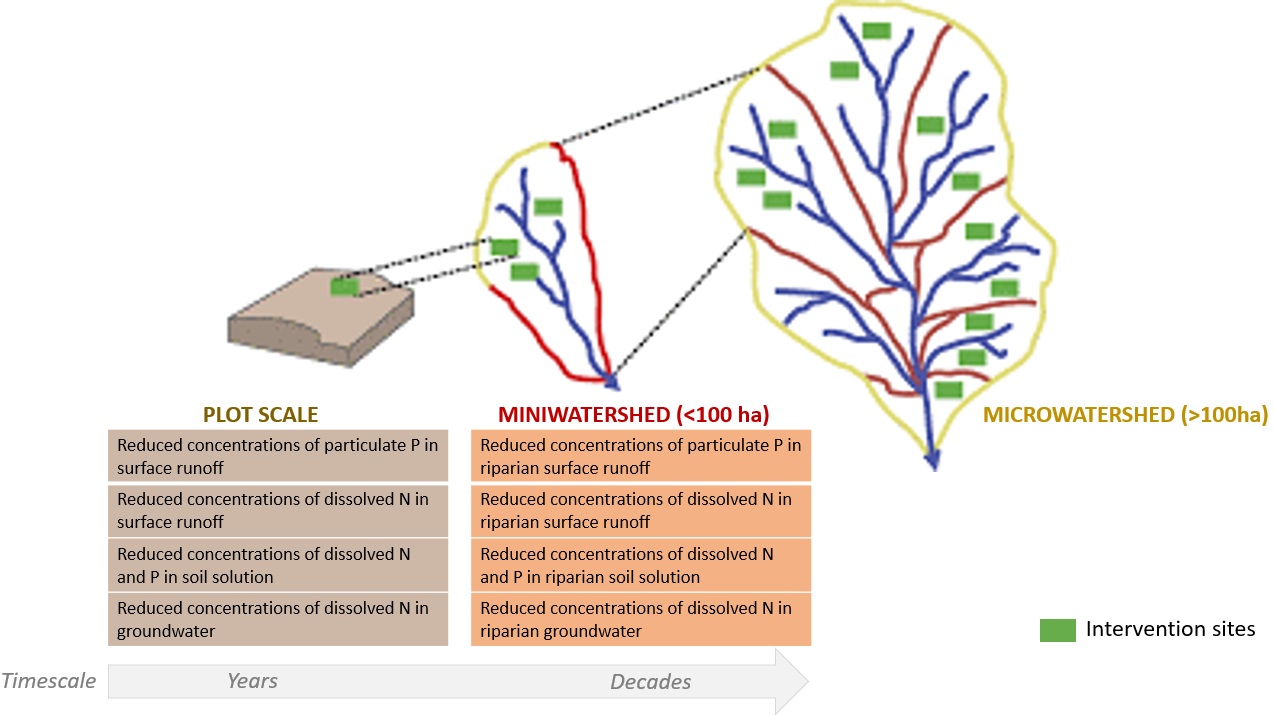
Figure 1 Pathway of change for nutrient load along an agricultural hillslope
More details on the pathway of change can be read here.