Nutrient Load Pathway of Change
Wednesday, May 18, 2022 5:14 AMThe pathway of change for N and P loads involves two main strategies: controlling inputs of excess nutrients from uplands to streams and rivers and nutrient removal and retention in riparian/wetland ecosystems.
In agricultural landscapes, additional N and P are added to the agricultures via the application of fertilizers. Commonly fertilizer application is poorly done:
- _ Wrong stuff _: For example, applying a fertilizer that is too soluble or too insoluble for the soil conditions;
- _ Wrong amount _: For example, overdoing some nutrients can interfere with the uptake of others;
- _ Wrong place _: For example, if soluble fertilizer is placed on top of the ground, it can volatize or erode, and those nutrients are lost; and
- _ Wrong time _: For example, timing N application when there isn't a growing crop there to capture that N.
As a result, fertilize use efficiency by plants is commonly very low and large amounts of excess nutrients run off to streams and rivers, leading to eutrophication—a pressing water quality problem worldwide. Therefore, the pathway of change to reduce excess N and P loads in streams and rivers starts with correcting poor management of agricultural fertilizer application.
The most effective strategy for controlling nutrient loads is source control via better fertilizer management in agricultural uplands , which can influence the movement through flow paths of both N and P.
Better fertilizer management involves using the right fertilizer in the right amount and place at the right time. Correct fertilizer management in agricultural hillslopes therefore is expected to decrease the leakage of excess N and P to flow paths (surface runoff, soil solution and groundwater) of both uplands and riparian ecosystems.
Nutrient removal and retention in riparian ecosystems may be significant, suggesting that enhancing natural removal and sequestration mechanisms by riparian restoration may be a viable strategy to further reduce loads of excess nutrients.
Nutrient removal and retention in riparian zones are dynamic processes and effects can be highly variable within riparian transects. Across different landscapes, effects depend greatly on hydrologic, pedologic, geomorphic and geologic contexts as well as on the amount, timing, and location of excess nutrients reaching the riparian system.
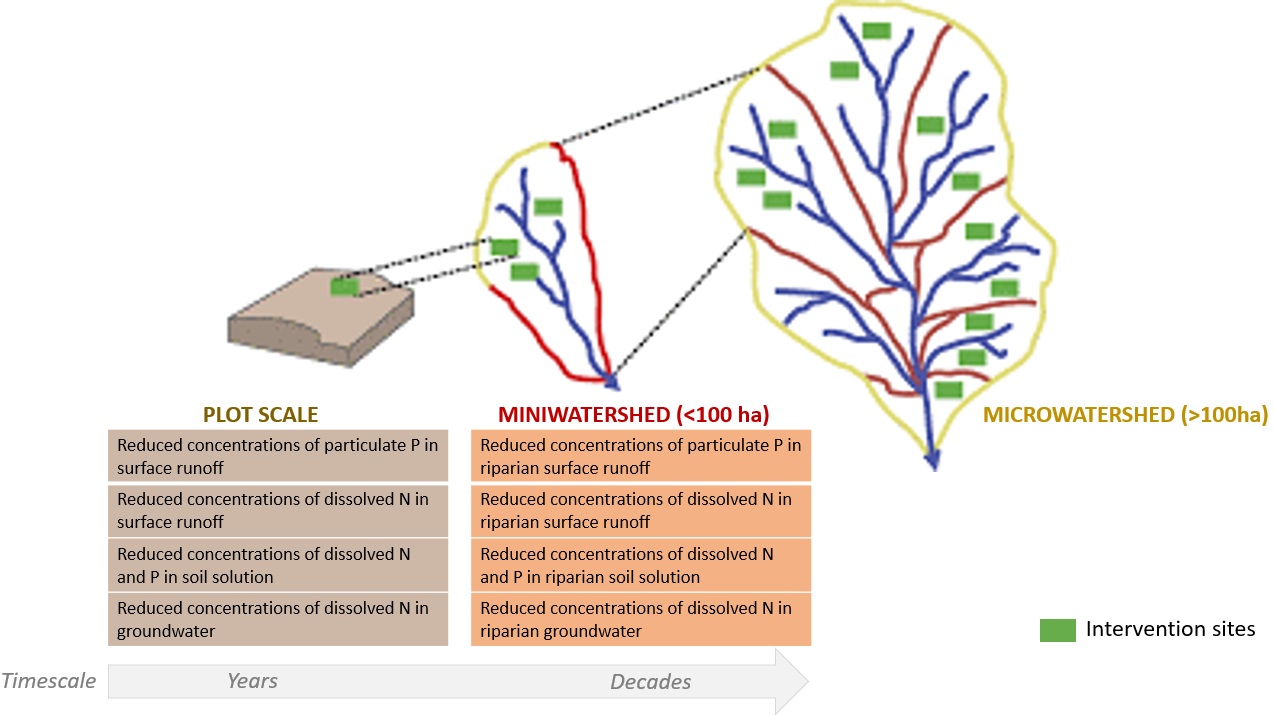
Figure 1 Pathway of change for nutrient load along an agricultural hillslope.
The figure displays the pathway of change for nutrient loading. At the plot scale in agricultural hillslopes, if correct application of fertilizers is conducted, concentrations of N and P in different soil components and flow paths are expected to occur over various years. Reductions of nutrient in hillslopes, in turn, is expected to reduce the amount of nutrients reaching riparian zones. Riparian restoration is expected to increase N and P uptake by plants, which provides a temporary storage for both nutrients. Riparian restoration is also expected to increase denitrification, which can permanently remove N from the terrestrial system. And, finally, riparian restoration is expected to promote a temporary storage of P. As a result, of both strategies, better fertilizer management and riparian restoration, concentrations of N in riparian zones are expected to be minimum (i.e., close to those observed in least disturbed watersheds) and concentrations of P should be significantly reduced.
The figure highlights in more detail the parameters to be monitored to assess effects on nutrient loading from managing fertilizer better along the pathway of change.