Water Quality About
Wednesday, May 18, 2022 5:43 AMDescription
Water quality of freshwater ecosystems refers to the physico-chemical characteristics of water. The physical characteristics include temperature, pH, turbidity, electrical conductivity. The constituents of stream water include suspended inorganic matter, dissolved major ions, dissolved nutrients, suspended and dissolved organic matter, gases, and trace metals. The physico-chemical of each freshwater system is determined by many factors including geologic, geomorphic, pedologic, biologic and hydrologic attributes of the watershed. Therefore, freshwater quality varies considerably in its physico-chemical composition across different landscapes.
Why monitor water quality for interventions on freshwater ecosystems?
Under undisturbed conditions, freshwater quality is important because it sets the condition for aquatic faunal and floral biodiversity to thrive. Freshwater quality is also important for drinking water; animal (including humans) need excellent water quality for consumption.
Monitoring water quality allows the understanding on whether quality parameters are within the expected range for different uses. Several countries across the world have legislation on the standard criteria for water quality to determine when water has become unsafe for people and wildlife. Here is an example of human health water quality criteria from the US Environmental Protection Agency.
It is critical to know the current status of water-quality conditions, and how and why those conditions have been changing over time to manage and protect the priceless resource more effectively.
Does terrestrial ecosystems impact water quality?
Yes, they do! Pollution from urban and agricultural areas pose a threat to water quality. There are two main ways terrestrial ecosystem impact water quality:
• Point source pollution (e.g., domestic sewage, industrial discharge, mining waste).
• Non-point (agricultural runoff) source pollution.
How is water quality monitored?
Water quality is monitored using probes and water samples. Probes are most commonly used to determine physical characteristics, including electrical conductivity, dissolved oxygen, temperature and turbidity. Water samples are collected to determine concentrations of anions, cations, heavy metals, pesticides, and fecal coliforms. While probes provide data instantly, water samples are analyzed in the accredited laboratories to quantify the concentration of different constituents.
The focus of this manual regarding methods to depict water quality is on sediment and nutrients, particularly N and P. Methods are related to in-stream strategies (described in the pathway of change page) and encompasses the following:
- In-stream measures to reduce in-stream sediment loads
- Stream bank erosion
- Stream bed stability
- In-stream measures to reduce in-stream nutrient loads
- Stream bank P concentrations
- Denitrification rates (not covered in this manual. Details on the benefits and shortcomings of various methods are provided by Groffman et al. (2006).)
- In-stream sediment concentrations
- In-stream N and P concentrations
Over what time scale would you typically expect to see a change water quality?
It depends on the type of source pollution (point and non-point) and type of constituent.
- Point-source pollution: For example, if pollution from domestic sewage discharge ceases completely, changes in dissolved organic carbon, which is one of the main pollutants from sewage, may be seen within days. On the other hand, heavy metals from industrial discharge may be present in the system for centuries as heavy metal dispersal depends highly on the dilution by river sediment loads.
- Non-point-source pollution:
- For concentrations of nitrogen (N), phosphorus (P) and pesticides that are main concerns associated with agricultural runoff, for example, it can take decades until changes are observed:
- Excess nitrogen is mainly in groundwater, groundwater moves very slowly, thus inputs of excess N from fertilization into streams can remain high for several decades until N concentrations decrease in groundwater.
- Phosphorus is mainly delivered associated with sediment. Within watershed, P accumulates along hillslopes and moves from upland to streams with storm events. In streams, it accumulates as stream sediment, and it moves slowly downstream during storm flows. As with N, changes in P can take decades to be observed given the slow movement of sediment across the land-stream-river continuum.
- Pollution from pesticides happens as excess pesticide leaches via surface runoff and groundwater. As with N and P, it can take decades to observed changes.
- For concentrations of nitrogen (N), phosphorus (P) and pesticides that are main concerns associated with agricultural runoff, for example, it can take decades until changes are observed:
The figure below summarizes the pathway of change for in-stream water quality, with an emphasis on sediment and nutrient concentrations while highlighting parameters to be monitored to assess effects on water quality from implementing in-stream restoration strategies. At the plot scale, if the strategies listed in the pathway of change page are implemented, there is the potential to reduce stream bank erosion, increase streambed stability, reduce stream bank P concentrations, and increase denitrification in artificial pools and floodplains, respectively. Reductions of stream bank and bed erosion, in turn, is expected to contribute to reduced amounts of sediments being transported downstream. Reduced stream bank P concentrations contributes to decreased P load. Finally, increased denitrification is expected to contribute to reducing N loads to downstream systems.
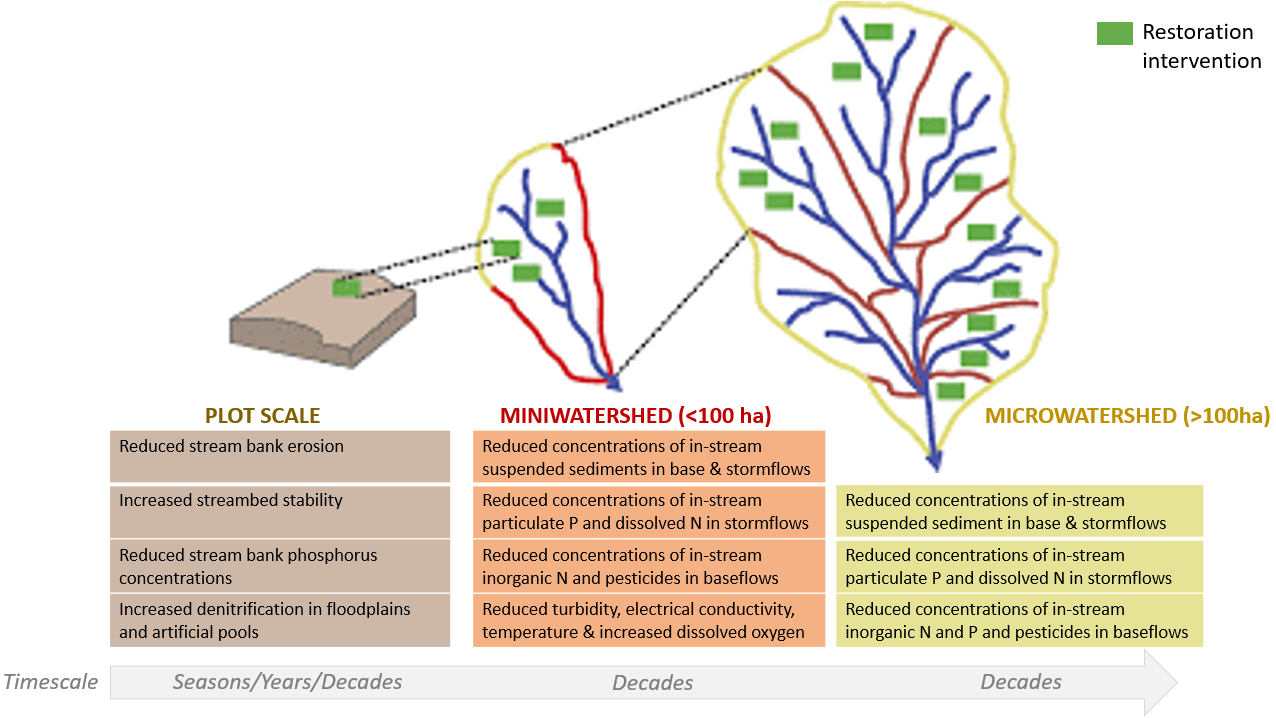
Figure 1 Pathway of change related to in-stream water quality, with an emphasis on sediment and nutrient concentrations