Surface Water Quantity Weir
Tuesday, May 17, 2022 5:36 AMText below is based on content made available by FAO's page on estimates of water flow
What is a weir?
A weir is an obstruction placed across a stream that forces all the water to flow through a notch in the weir. When a weir is in place across the stream it raises the upstream water level. To be efficient, a weir should create a sufficient vertical drop between the notch bottom (called crest) and the downstream water surface. In such a case, the water will fall free, and air can circulate beneath the water as it overflows. Two common types of weir's are the triangular weir and the rectangular weir. Based on the geometry of the weir, the flow rate across it can be directly calculated if the "head", i.e., the difference in level between the upstream water level and crest height is know.
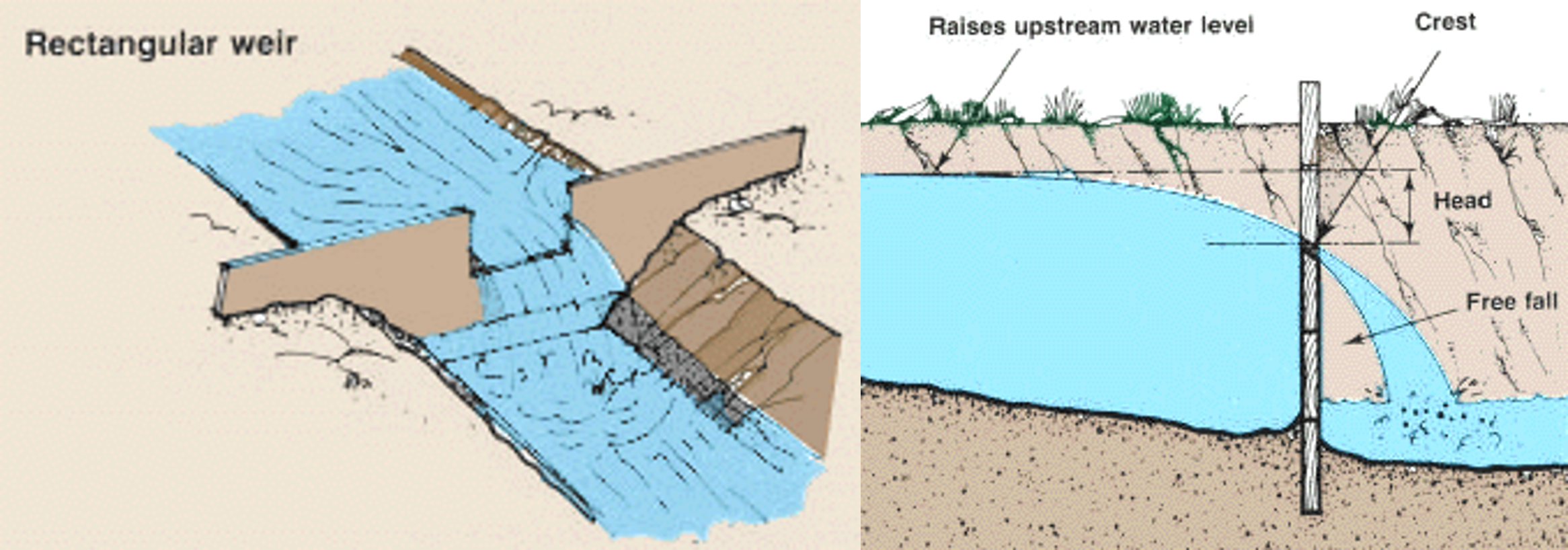 A Rectangular Weir. Source: FAO
Installing a weir
Guidelines:
- A weir should be installed in a channel that, upstream from the weir, is straight for a minimum distance at least 10 times greater than the length of the weir crest.
- Ideal for stream segments with flow < 114 l/s.
- The water-level upstream of the weir should be at least 5cm above the weir crest.
- The water drop behind the weir is high enough so the water will fall free.
Sampling design Weirs will be an appropriate choice for discharge monitoring on small streams and downstream of plot-scale restoration projects. The primary location for monitoring will be immediately downstream of the intervention site while considering the installation guideline given above.
Main Associated Costs:
- Material for construction can be wood, corrugated roof sheeting or even a suitable placed log of wood (for a rectangular weir).
- Depending on location and width of stream, additional costs may be incurred if required to divert the stream for weir construction or on construction methods for building it in a flowing stream.
Maintenance and monitoring
To ensure accurate water flow estimates using a weir you must keep a regular record of the water level upstream and maintain it regularly:
- Clean the weir and remove floating debris caught in the notch;
- Remove any silt that builds up on the upstream side of the weir;
- Control the erosion of the stream bottom on the downstream side of the weir;
- Check the alignment of the weir, both vertical (from the surface of the water) and perpendicular to the flow of the water;
- Check that the weir is watertight;
- Check that the zero mark on the upstream measuring stick is equal to the weir crest.
Main Associated Costs: Local labor cost for duration of monitoring
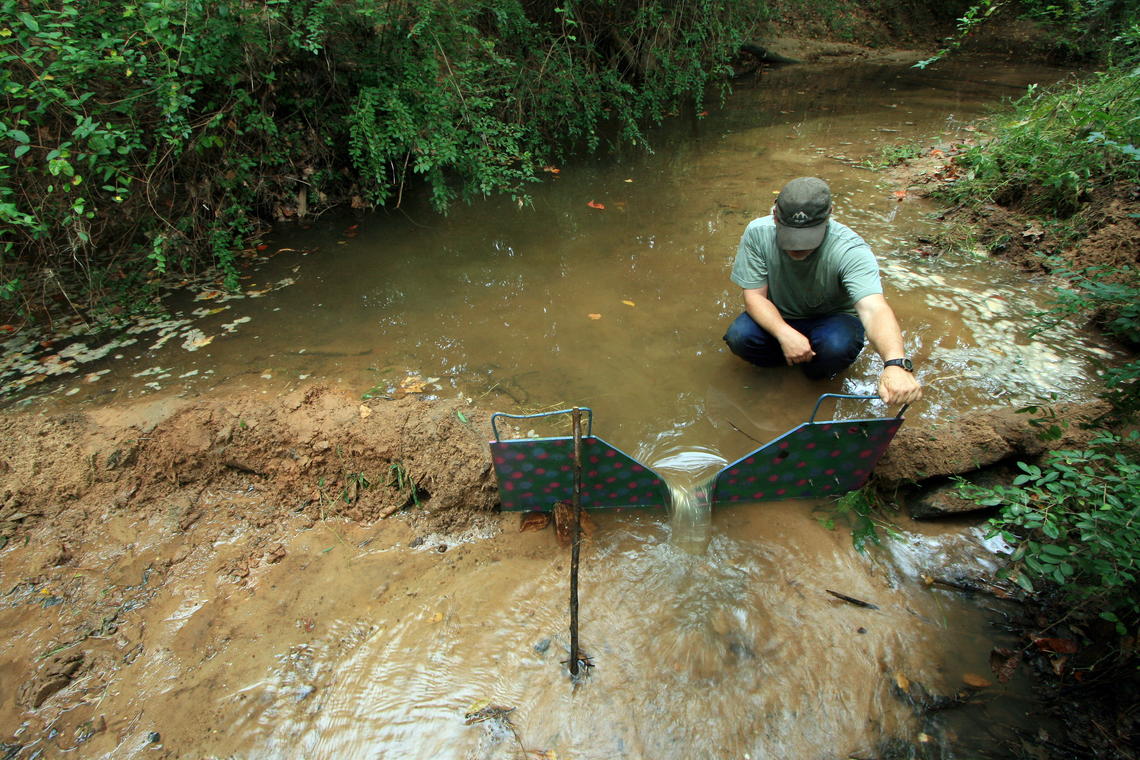 The metal structure is a "V" or triangular weir. A sediment dam was built on either side of it to force the water through the weir. Source: Alan M Cressler, USGS